Master COSHH Regulations for Your Small Business
Comprehensive guidance on the Control of Substances Hazardous to Health regulations. Protect your workers, ensure compliance, and avoid costly penalties.
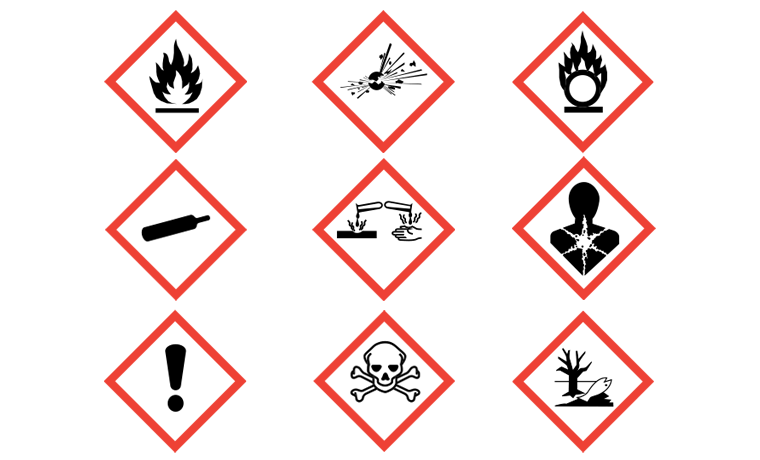
Comprehensive guidance on the Control of Substances Hazardous to Health regulations. Protect your workers, ensure compliance, and avoid costly penalties.
The Control of Substances Hazardous to Health Regulations require you to adequately control exposure to materials in the workplace that cause ill health.
COSHH is UK legislation that requires employers to control exposure to hazardous substances to prevent ill health. It applies to most harmful substances but excludes lead, asbestos, and radioactive substances which have separate regulations.
All employers and self-employed people who work with substances that could be hazardous to health. This includes small businesses with fewer than 50 employees across all sectors - construction, healthcare, retail, and more.
Every employer must follow these essential steps to comply with COSHH regulations and protect worker health.
Find out what health hazards are present in your workplace by reading labels, safety data sheets, and considering process-generated substances.
Decide how to prevent harm to health by conducting a thorough risk assessment of all hazardous substances and processes.
Provide and implement control measures to reduce harm to health, following the hierarchy of control from elimination to PPE.
Make sure control measures are used correctly and consistently by all workers and visitors to your workplace.
Keep all control measures in good working order through regular maintenance, testing, and examination by competent persons.
Provide information, instruction, and training for workers and others about hazards, risks, and protective measures.
Provide monitoring and health surveillance in appropriate cases to ensure controls remain effective and workers stay healthy.
Plan for emergencies including spillages, accidents, and equipment failures to ensure rapid and effective response.
A systematic approach to identifying, assessing, and controlling risks from hazardous substances.
Consider who might be harmed and how:
Follow the hierarchy of control:
If you have 5 or more employees, you must record your assessment. Even with fewer employees, it's good practice to document your findings.
Risk assessments must be reviewed regularly and updated when circumstances change.
Control measures should be implemented in order of effectiveness, starting with elimination and working down to PPE.
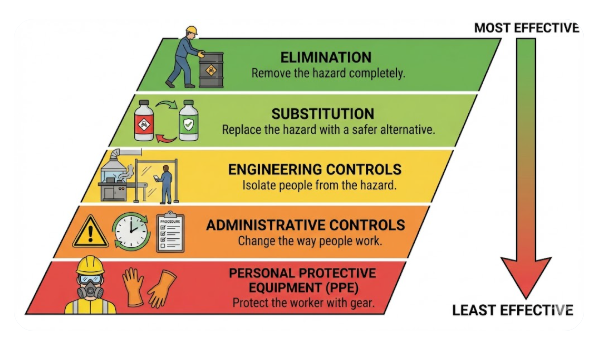
The most effective control measure - completely remove the hazardous substance.
Replace with a less hazardous substance or process.
Physical controls to contain or remove hazardous substances.
Policies, procedures, and training to reduce exposure.
Last resort when other controls cannot adequately reduce exposure.
Learn from practical case studies showing how COSHH requirements are implemented in different industries.

A hairdresser developed irritant contact dermatitis from wet work. Hands were painfully itchy, scabbing, and bleeding.

Workers exposed to silica dust from cutting concrete blocks, risking long-term lung disease.
Identifying and addressing problems early prevents serious health issues.
Often simple, practical control measures are highly effective.
Employee education and engagement is essential for success.
Ongoing monitoring helps maintain effective controls.
Breach of COSHH regulations is a criminal offense with serious penalties.
Courts can impose unlimited financial penalties for serious breaches.
Serious breaches can result in imprisonment for responsible individuals.
Both employers and employees can be held personally liable.
Access official guidance, tools, and professional support to ensure COSHH compliance.
Access the latest guidance, regulations, and example risk assessments from the Health and Safety Executive.
Visit HSE COSHH PageIndustry-specific control guidance sheets to help you implement practical control measures.
Download GuidesUse HSE's example risk assessments as templates for your own workplace assessments.
View ExamplesOur digital product shop offers comprehensive COSHH compliance tools, templates, and training materials specifically designed for small businesses.
Explore Digital ProductsComprehensive digital products designed specifically for small businesses to achieve and maintain COSHH compliance.
Ready-to-use COSHH risk assessment templates for various industries.
PopularComprehensive training packages for managers and employees.
NewDigital tools for monitoring, recording, and managing COSHH compliance.
Featured